Preferred trade partner of Saudi Tourism Authority

 Chat with us
Read latest news, guides and necessities about Hajj and Umrah.
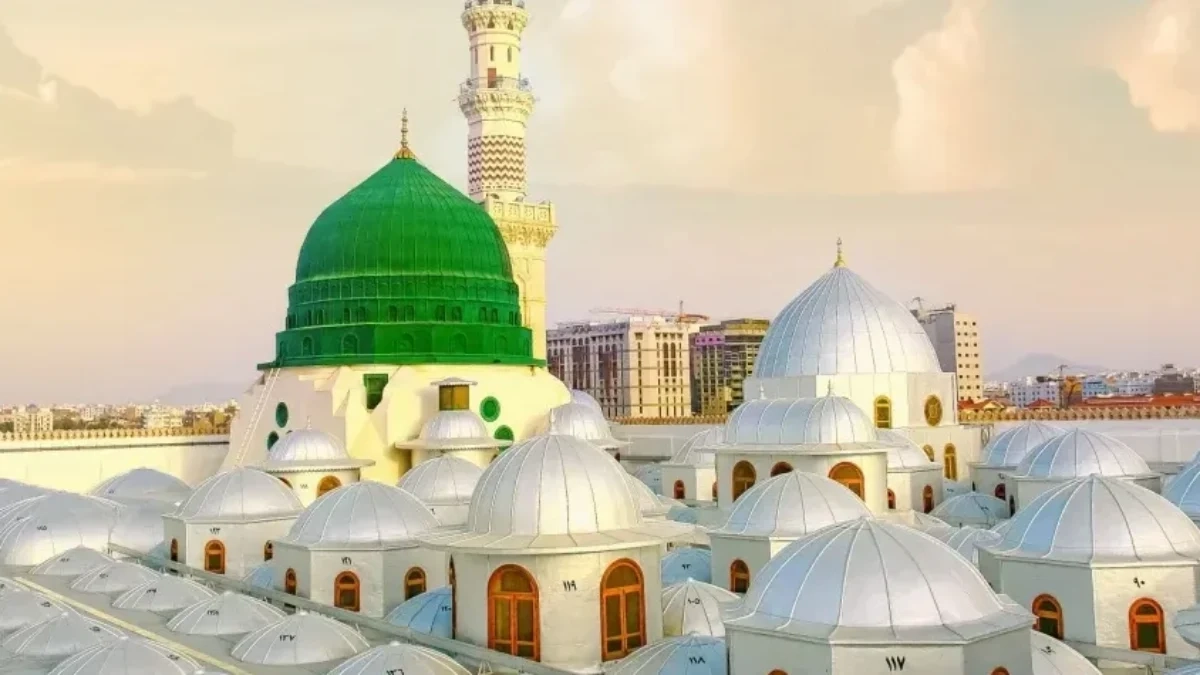
If Makkah is intensity — Tawaf, Sa’i, du’a at the Kaaba, late nights in prayer — Madinah is softness. Pilgrims often describe Madinah as peaceful, slower, and deeply emotional. It’s where you breathe, reflect, and let your heart settle before you return home.
Many UK pilgrims plan their trip like this: Makkah first (Umrah), then Madinah for a few days. That’s not “holiday mode.” That’s spiritual recovery. You’ve cleansed the body and soul in Makkah; now you sit with the Prophet ﷺ in Madinah and ask Allah to accept it.
In Madinah, you’re not rushing to complete rituals. You’re visiting sacred places tied to the Seerah (life of the Prophet ﷺ), the Sahabah (Companions), and early Islam. You’re making du’a where they stood. You’re reminding yourself that faith is not just an act, it’s a legacy.
A lot of pilgrims from the UK now build in a 1–3 night Madinah stay specifically for ziyarat (visiting historic and spiritual sites). This is common even in “last-minute Umrah packages from UK,” because people want:
Rest for elderly parents before flying back to London, Birmingham, or Manchester
Time to pray in Masjid an-Nabawi
A guided half-day tour of Madinah’s major Islamic sites in one loop (Quba → Uhud → Masjid al-Qiblatain → other historical points)
LoveUmrah.com can arrange Madinah hotel bookings within walking distance of Masjid an-Nabawi and private transport for ziyarat, so you avoid taxi haggling and language stress.
Masjid an-Nabawi (the Prophet’s Mosque) is the second holiest mosque in Islam. The Prophet Muhammad ﷺ is buried here, alongside Abu Bakr (RA) and Umar (RA). Pilgrims travel across the world simply to send salam to the Messenger of Allah ﷺ at this blessed place. (Source: Saudi Ministry of Hajj and Umrah; traditional Islamic sources)
Praying in Masjid an-Nabawi carries immense reward. You stand in a place where the first Muslim community lived, learned, and spread Islam. You send salawat upon the Prophet ﷺ directly beside his resting place. This is the emotional centre of Madinah for every pilgrim.
The Rawdah (al-Rawdah ash-Sharifah) — the area between the Prophet’s ﷺ blessed resting place and his original minbar — is described in authentic narrations as “a garden from the gardens of Paradise.” Because of its virtue, the Rawdah is in extremely high demand and entry is now controlled by timed access/permits to prevent crowd crush. Saudi authorities manage access windows via queue systems and digital booking to protect pilgrims and avoid overcrowding. (Source: Saudi Ministry of Hajj and Umrah crowd management updates)
Tip: Go early, stay patient, and keep your voice gentle. This is not a tourist photo stop. It’s worship.
If you’re bringing elderly parents or wheelchair users, staying close to Masjid an-Nabawi matters more than star rating. The shaded courtyards and smooth marble walkways around the Prophet’s Mosque are easier for mobility than steep streets in Makkah, but distance still matters. Hotels facing the mosque mean:
Less walking in peak heat
Easier access for salah
Less stress after Fajr or Isha
This is why LoveUmrah.com prioritises Madinah hotels within easy walking distance for elderly pilgrims and can arrange wheelchair-friendly access. We focus on comfort, not just “5-star branding.”
When you ask for a Madinah hotel, do not just ask “Is it nice?” Ask:
“How many minutes’ walk to Masjid an-Nabawi?”
“Is there wheelchair access and lifts?”
“Is breakfast included for my parents so I don’t have to drag them out to eat?”
Quba Mosque is deeply loved. It is known as the first mosque in Islam, built by the Prophet Muhammad ﷺ after his Hijrah (migration) from Makkah to Madinah. (Source: Hajj and Umrah heritage references; classical Seerah narrations)
Visiting Quba is sunnah. The Prophet ﷺ used to visit Quba regularly. Many pilgrims consider it a must-see stop in Madinah after Umrah because it connects you to the earliest days of the Muslim community in Madinah.
The Prophet ﷺ informed us that whoever makes wudu (purifies themselves) at home and then prays two rak’ahs in Quba Mosque receives a reward like that of performing Umrah. (Reported in authentic hadith collections; widely cited in Umrah guides.) (Source: Hajj & Umrah educational material; scholarly commentary on Quba’s virtue)
This is why you’ll see pilgrims make wudu, enter Quba, and pray two rak’ahs with full focus.
Quba is only a short drive from Masjid an-Nabawi. On a typical Madinah ziyarat tour, Quba is often stop #1 early in the morning before crowds and heat build. Most private drivers in Madinah know that UK pilgrims want:
Quba Mosque
Mount Uhud & the Martyrs’ Cemetery
Masjid al-Qiblatain
(Optional) historical trench (Khandaq) area / battle sites
LoveUmrah.com can arrange a private driver/van so you’re not negotiating fares in Arabic with random taxis. You get picked up from your Madinah hotel, driven to each stop, given time to pray and reflect, and dropped back.
Mini CTA:
Message LoveUmrah.com on WhatsApp to book a Madinah ziyarat loop (Quba → Uhud → Qiblatain) with a trusted driver. No stress. No guessing.
Mount Uhud is where the Battle of Uhud took place in 625 CE (3 AH). This was one of the most significant early battles in Islam. Many companions (Sahabah) were martyred here, including Sayyiduna Hamzah ibn Abdul Muttalib (RA), the uncle of the Prophet ﷺ. (Source: classical Seerah accounts; Battle of Uhud historical summaries)
When you stand at Uhud, you’re standing where the Prophet ﷺ himself was wounded defending Islam. You’re reminded that Islam wasn’t spread by comfort — it was protected through sacrifice and loyalty. You feel the cost of faith.
Next to Uhud is the Martyrs’ Cemetery. Pilgrims visit this area to make du’a for the shuhada (martyrs) and pay respects to Hamzah (RA) and those who gave their lives. You don’t go there like a tourist. You go humbled.
Pilgrims often describe Uhud as one of the most emotional parts of Madinah ziyarat — after Masjid an-Nabawi — because it brings the Seerah to life.
Keep your voice low
Avoid shouting, filming disrespectfully, or pushing
Make sincere du’a for the martyrs
Dress modestly and maintain adab (respectful manners)
Uhud is outdoors, with direct sun. Plan this stop after Fajr or early morning before Madinah heats up. Bring water, a hat or umbrella, and (if needed) a small folding stool. LoveUmrah.com can arrange for your driver to carry chilled water and take breaks in shade so parents aren’t exhausted.
Masjid al-Qiblatain is famous because it’s where the qibla (direction of prayer) was changed by divine command from Jerusalem (Bayt al-Maqdis) to Makkah. (Source: traditional narrations of the qiblah change; early Madinan Seerah)
Imagine standing in the very place where the first Muslim community literally turned in prayer, physically and spiritually orienting toward the Kaaba. That moment symbolised the distinct identity of the Ummah. This is not “just a building.” It’s a turning point in Islamic history.
For families bringing teenagers or first-time travellers, Masjid al-Qiblatain is often the “lightbulb moment.” They’ve heard about praying toward two qiblas in stories; here, they can see it. It becomes real.
Most ziyarat drivers will give you 15–20 minutes to pray, reflect, and take in the history. You don’t need hours — but you do need quiet. Let everyone have their own moment.
Jannat al-Baqi (Al-Baqi Cemetery) is next to Masjid an-Nabawi. It is the burial place of many of the Prophet’s ﷺ family members and Companions (RA). Traditionally, it’s known as the resting place of countless early Muslims, and standing near it is a deep reminder of akhirah (the Hereafter), humility, and the temporary nature of life. (Source: classical Islamic biographies, early companions’ burial traditions)
This is where you quietly make du’a for those buried there and reflect on your own return to Allah. It’s not about sightseeing. It’s about grounding yourself in reality: status, wealth, title — none of that remains.
Dress modestly and observe local guidelines
Do not shout, argue, debate
Follow the instructions of Saudi staff/security, as certain areas are controlled for crowd safety and privacy
Many visitors simply stand nearby after Fajr, face the cemetery with humility, and make du’a.
Your ziyarat in Madinah doesn’t have to stop at “the big four” (Quba, Uhud, Qiblatain, Baqi). A good driver can include other meaningful spots.
Some tours include locations associated with the Battle of the Trench (Al-Khandaq), where the Prophet ﷺ and the companions defended Madinah through strategy, unity, and sabr (patience). Standing there gives you a sense of Madinah as a defended city, not just a peaceful city.
Ajwa dates are famously linked to Madinah in traditional narrations. Many pilgrims buy Ajwa, pressed dates, and gifts for family here instead of waiting until the airport (where prices are higher and choice is weaker). Local markets are more authentic, more affordable, and honestly more fun.
Unlike the intense pressure of the tawaf area in Makkah, Madinah evenings can feel gentle. Sitting in the courtyard near Masjid an-Nabawi after Maghrib or Isha, under the huge retractable umbrellas, letting your parents rest, offering salawat in a calm voice — that is a memory you will keep forever.
Plan your ziyarat (Quba → Uhud → Qiblatain → historic sites) early in the morning — ideally after Fajr and a light breakfast. By mid-morning the sun gets strong, and it’s tougher for elderly travellers.
Bring:
Water
Light, modest clothing
A hat/umbrella for older relatives
A foldable wheelchair if walking is difficult
Madinah is kinder on mobility than Makkah, but Uhud is still outdoors and uneven in places. Saudi authorities continue to invest in shade, cooling infrastructure, and safer movement for pilgrims because of past heat and crowd incidents, especially during peak Hajj seasons.
If you don’t speak Arabic, trying to negotiate multiple stops (“Quba then Uhud then Qiblatain then back to my hotel near Masjid an-Nabawi”) can be stressful. It can also get expensive if the driver charges “per stop.”
A private Madinah ziyarat driver arranged in advance:
Knows the route pilgrims want
Waits for you at each site
Helps elderly relatives in/out calmly
Drops you back at your hotel
LoveUmrah.com can bundle this with your Madinah hotel booking and airport transfer. That way, from the moment you land to the moment you leave, you’re not standing in the street hoping for help — you already have help.
This matters especially for UK pilgrims arriving late. Instead of landing in Madinah or Jeddah and trying to negotiate taxis with luggage, a pre-arranged driver meets you, takes you directly to your hotel (walking distance to Masjid an-Nabawi if requested), and then schedules your ziyarat for the next morning.
LoveUmrah.com offers:
Verified hotels in Madinah close to Masjid an-Nabawi
Private airport pickup
Half-day Madinah ziyarat tour loops
Support on WhatsApp if you need anything during the trip (delayed flight, slow check-in, mobility request)
Send us on WhatsApp:
Your travel dates (for example: “We’ll be in Madinah this weekend” / “We’re coming after Umrah next Friday”)
How many travellers (adults / children / elderly)
Your priority: “walking distance to Masjid an-Nabawi” or “affordable but safe”
We’ll reply with:
A recommended hotel near Masjid an-Nabawi
A private ziyarat tour plan (Quba, Uhud, Masjid al-Qiblatain, etc.)
Airport pickup or Makkah→Madinah transport options
Transparent pricing (no “cash on arrival” surprises)
Your ziyarat in Madinah should feel sacred, not stressful. You shouldn’t be arguing with taxi drivers, dragging parents in the sun, or guessing which mosque is where.
With the right plan, Madinah becomes exactly what it’s meant to be for an Umrah pilgrim: rest for the body, softness for the heart, and time with the Messenger of Allah ﷺ before you return home.
Your journey of faith starts here — and we’ll get you there with comfort, clarity, and respect.
Sources (with hyperlinks)
The Saudi Ministry of Hajj and Umrah and Saudi Press Agency have confirmed that Muslims holding valid Saudi visas — including tourist visas, transit visas, and other entry visas — are permitted to perform Umrah, reflecting Saudi Arabia’s Vision 2030 goal of welcoming more pilgrims. This policy expansion has made it easier for international pilgrims, including UK travellers, to combine Umrah with Madinah ziyarat and spiritual tourism.
https://www.spa.gov.sa/en/N2414747
https://economictimes.indiatimes.com/nri/visit/all-types-of-visa-holders-now-eligible-to-perform-umrah-in-saudi-arabia/articleshow/124330849.cms
https://gulfbusiness.com/saudi-rule-visas-allow-holders-to-perform-umrah/
Masjid an-Nabawi: second holiest mosque in Islam, burial place of the Prophet Muhammad ﷺ, Abu Bakr (RA), and Umar (RA); the Rawdah described as “a garden from the gardens of Paradise,” now managed with scheduled entry windows to reduce crowd crush and maintain safety for pilgrims, especially elderly and women.
https://www.saudimoments.com/prophets-mosque-guide
https://www.visitsaudi.com/en/see-do/madina/prophets-mosque
https://www.arabnews.com/node/2299411/saudi-arabia
Quba Mosque: recognised as the first mosque in Islam, founded after the Hijrah. Prophetic narrations mention that praying two rak’ahs in Quba, after performing purification (wudu), carries a reward similar to performing an Umrah. This is widely cited in classical hadith sources and modern Hajj/Umrah guides.
https://hajjumrahplanner.com/ziyarah-places-madinah/
https://www.islamiclandmarks.com/madinah/quba-masjid
Mount Uhud & the Martyrs’ Cemetery: site of the Battle of Uhud (625 CE / 3 AH), where many companions were martyred, including Hamzah ibn Abdul Muttalib (RA). Pilgrims visit to reflect on sacrifice, loyalty, and sabr.
https://www.islamiclandmarks.com/madinah/mount-uhud
https://www.islamiclandmarks.com/madinah/graveyard-of-the-martyrs-of-uhud
Masjid al-Qiblatain: known as the Mosque of Two Qiblas, where the qibla changed from Jerusalem to Makkah. This historical shift is considered a defining moment in early Madinan Islam and is visited by pilgrims as part of standard Madinah city tours.
https://www.islamiclandmarks.com/madinah/masjid-al-qiblatain
https://www.visitsaudi.com/en/see-do/madina/masjid-al-qiblatain
Crowd, heat, and elderly safety: Saudi Arabia has invested heavily in crowd control, shade structures, cooling, medical access, and managed visitation systems after past incidents linked to overcrowding and extreme heat in pilgrimage seasons. This is especially important for elderly UK pilgrims doing ziyarat at outdoor sites like Uhud.
https://www.ft.com/content/2fabdb68-1502-4f0d-86dd-49a40991b9c7